Your foggy brain is slowly getting clearer after the anesthesia and the trauma of the surgery, and your pain should be decreasing. As you stabilize physically, you will be tempted to look into the future and get anxious wondering what kind of life you will be able to lead with your ostomy. Don’t go there yet! It’s still the time to keep your head down and focus on getting through each day…for the next 7 days!
Ostomy surgery can be isolating, but you are not alone. Countless others have been on an ostomy journey too, and though it wasn’t always easy, they returned to thrive. Today, I’d like you to meet my dear friend Jearlean Taylor who is a double ostomate due to a rare type of cancer. She has had her urostomy and colostomy since she was just three years old!! She is now a successful entrepreneur and a high fashion print and runway model. Her enthusiasm is infectious, and I know she will be an encouragement to you today.
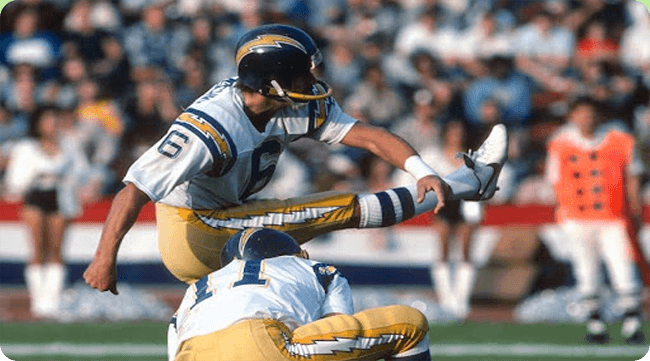
Former NFL Kicker
Former NFL Kicker, Walter Payton Man of the Year, Grateful Ostomy Patient
You don’t have to go through this journey alone
Double ostomate and fashion model, Jearlean Taylor, encourages you that there is a whole community of people with ostomies who want to help you.
The Care of a Caregiver
The Belief of a Caregiver
Share these Special Bonus Videos with Your Caregiver. Your recovery can also be difficult for your caregiver and the people who love you. Their care and belief in YOU can make all the difference!
Roadmap to Recovery
Take a few more steps today than you did yesterday.
Sleep — Turn off your phone and don’t feel like you need to respond to every text message or voicemail.
It’s important for you to support and protect your abdominal area as you recover. Watch this video to learn how to brace yourself if you have to cough or sneeze.
You may be dreaming of a cheeseburger right now and wondering if you will ever be able to enjoy the foods you love, now that you have an ostomy. The good news is that you’ll probably get back to eating most of your favorite foods but how and when you eat and drink can make a big difference in your recovery. Watch this video from IBD Dietitian, Danielle to learn the Top 5 Eating Guidelines with an ostomy.
• The type of surgery you had may affect the foods you eat. Follow the advice of your surgeon, dietitian, and WOCN nurse regarding any dietary restrictions, especially right after surgery. Ask if you will have any restrictions on a long-term basis. Learn more about food guidelines for your type of ostomy surgery here.
• In general, you will want to eat frequent small meals throughout the day instead of 2-3 larger meals.
• Your appetite may decrease after surgery, so try eating smaller amounts of food every two to four hours. Keeping a regular schedule for meals and snacks can help reduce gas and result in better absorption of nutrients.
• Consider having your largest meal in the middle of the day, especially early after surgery. Try not to eat large amounts of food in the evening. This will decrease stool output and may keep you from having to empty your ostomy bag during the night.
• Eat foods that may thicken stool — like applesauce, bananas, white rice (boiled), cheese, marshmallows, saltines, tapioca, peanut butter (creamy), potatoes (no skin), pretzels, oatmeal (when OK to have fiber), pasta, white bread (not high in fiber), barley (when ok to have fiber), and yogurt, several times a day.
• Some foods can change the color of your stool. For example, beets and foods or drink with red dye may turn your stool reddish while asparagus, broccoli, and spinach can darken your stool.
• When you begin to add more food variety back into your diet, try adding only one new food every few days to see the impact on your digestion. If there are foods that bothered you before surgery, add back other foods first and eat only small portion sizes when you re-try this food. If a food doesn’t do well, wait a few weeks and then re-try it. Keep a log of foods you try and how you feel after eating them.
• To reduce gas, avoid chewing gum, drinking with straws, drinking carbonated beverages, smoking or chewing tobacco, eating too fast, and skipping meals. Missing meals can cause the small intestine to be more active and increase gas and watery stools. The “lag time” from eating a gas-producing food to the actual release of gas is about two to four hours for ileostomy patients, and 6-8 hours for distal colostomy patients.
Potential Complications
Be vigilant so you can stay out of the hospital
These potential complications may be preventable if you recognize the warning signs early and take the appropriate action.
1. Dehydration. One out of three ileostomy patients will be readmitted to the hospital for dehydration within 30 days of their operation. Learn how to stay hydrated here.
Learn more about hydration from our dietitian, Danielle.
2. Skin problems. Peristomal skin is the skin surrounding your stoma and should look and feel just like the skin on the rest of your abdomen (not irritated or red). Learn more about how to care for your peristomal skin and catch any problems early so they can be addressed.
3. Hernia. This happens when an organ or other tissue pushes through your abdominal muscles and creates a bulge. Since having ostomy surgery increases your risk of developing a hernia, you will want to follow these guidelines:
• Limit your lifting to 5-10 lbs. for the first 4-6 weeks post-surgery (or as directed by your surgeon) and always use proper lifting technique.
• Support the area around your stoma if you sneeze, cough, or laugh by squeezing a folded blanket or pillow.
Learn more about hernias and how to protect yourself here.
Hear Nurse Melody talk about hernias and how to prevent them here.
4. Problem Solving. You may encounter problems like skin irritation, leaks, no output and others. Click here for more details.
5. Medical Emergencies.Review this list so you will know when to call your surgeon/nurse or go to the nearest emergency room.
Embracing Ostomy Life Goals
Goals for Today
• Continue to manage your pain. It’s easier to stay ahead of the pain than to try to catch up.
• Make sure you have the best fitting appliance for your ostomy. Hear Nurse Melody and Nurse Joy talk about the importance of trial and error in selecting the best appliance.
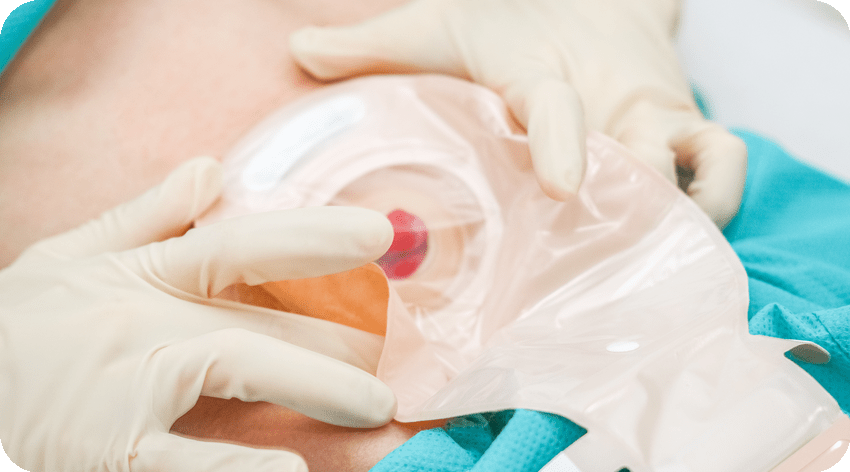
If you haven’t been an active participant in changing your pouch yet, now’s the time!
• Practice changing your pouch system with assistance from your WOCN.
I remember my first pouch change took nearly an hour and my mom and I both ended up in tears. Be patient with yourself and your caregiver. This will become as routine as brushing your teeth – trust me on this.
Rolf
(Ileostomy)
Ostomy Terms you Want to Know
Dehydration
Dehydration occurs when you can’t replace the fluids and electrolytes your body loses.
People with ostomies who have had their colons removed are more susceptible to getting dehydrated because the colon’s main job is to absorb water and electrolytes (like sodium and potassium) from our food. Therefore, maintaining proper hydration is a critical nutritional concern for people who have lost a portion or all their colon. Among ostomates, ileostomy patients are at the highest risk for dehydration —in fact, it is the most common reason that Ileostomates are readmitted to the hospital.
Click the button below to Watch the video from IBD Dietitian, Danielle, to learn how to stay hydrated — and not be forced to return to the hospital.
1. If you’re home today, you have reached one of your goals and I’ve got an important message to share with you. Watch the video here.
2. Take some time to thank your caregiver(s) today. Watching someone you love in pain and adapting to life with an ostomy is tough! Tell them how grateful you are and how much their support means to you. Watch the video here.
3. Gratitude is a wonderful tool as you move through difficult times in life. Gratitude is also a helpful psychological and emotional practice that creates positive changes in your brain. The more you reflect on what you’re grateful for, the more you will notice it in the moment. Begin this practice by keeping a gratitude journal. Each evening, consider reflecting on the day’s best moment, worst moment, and moment(s) for which you are grateful.
4. Remember that you are not alone through this journey. More than 100,000 ostomy surgeries are performed in the United States each year! An entire community is standing by to help and encourage you. Keep your support system close and keep reaching out to them.
5. Treasure the lessons you learn. Keep looking for the lessons in every experience no matter how small. Throughout this journey, you will either get stuck or grow…try to make an intentional choice to grow through your experience. Record these experiences as you accumulate life lessons or share these with someone. Let these encourage you as you continue your journey.
How helpful was today’s message for your recovery?
We offer our sincerest thanks to Joan Scott — a kind ostomate and brilliant writer — for allowing us to include excerpts of, her book, “The Ostomy Raft”, in Alive & Kicking. To purchase a copy filled with tons of practical tips for living with an ileostomy or colostomy, click the button below.
Rolf Benirschke is a former NFL Man of the Year and All-Pro placekicker who played 10 seasons in the NFL for the San Diego Chargers. His career was briefly interrupted when he was diagnosed with Crohn’s Disease that required ileostomy surgery in his third season. Remarkably, Rolf returned to play seven more years with the Chargers, becoming the first ever professional athlete to play with an ostomy appliance. He has been an outspoken champion of the ostomy community for the past 40 years and created Embracing Ostomy Life™ to provide the hope, education and encouragement to ensure that no one goes through ostomy surgery alone.
Join Team HOPE
Do you wish you could connect with someone like you who has an ostomy and similar life goals? You can! Our Team HOPE (Helping Ostomates through Peer Encouragement) program can pair you with a volunteer who has an ostomy that will listen, empathize and suggest resources to help you along your journey.