Although it may feel repetitive, try to gradually increase your activity level each day. You ARE getting stronger both physically and mentally because of the small steps you are taking each day. I know how hard it is to be patient but there is simply no way to speed up the healing process. It takes time! You are likely getting requests from friends and family who want to come see you and help but you may feel like I did…embarrassed and nervous and maybe not ready yet to share all the details of your surgery.
What I’d like you to think about today is that valuable lesson I learned from the POWs of “Letting Others Help”. If you can set aside your pride and insecurities and be brave and vulnerable, seeing a friend can be a remarkable boost to your recovery and a blessing for both of you!
It can be difficult to share the news about your ostomy – I know! I was able to talk generally about “my condition” as I returned to play until a sportswriter “leaked” (no pun intended) the reality of my ostomy. At first, I was mortified to read about it in print for all the world to see but my attitude and acceptance of my situation had already begun to change, and it quickly turned out to be a gift. No one is going to be able to know that you have an ostomy just by looking at you, so you can take your time when you want to start telling people…if at all.
I want to introduce you to my friend Colin, who shares his regret that he did not tell his friends sooner about his ostomy.
Keep your focus on setting and achieving those small daily goals and keeping your recovery “one day at a time” mindset. You are getting there!!
Former NFL Kicker
Former NFL Kicker, Walter Payton Man of the Year, Grateful Ostomy Patient
Telling people about your ostomy
Colin shares his fears about “acceptance” and telling his friends about his ostomy.
People take their cues from you – when you are comfortable and able to share what you’ve gone through, people will become more comfortable as well and develop a whole new respect for you and what you have overcome.
Food and Nutrition
Continue to add new foods to your diet as instructed. Review the food guidelines for your type of ostomy surgery below.
These potential complications may be preventable if you recognize the warning signs early and take the appropriate action.
1. Dehydration. One out of three ileostomy patients will be readmitted to the hospital for dehydration within 30 days of their operation. Learn how to stay hydrated here.
Learn more about hydration from our dietitian, Danielle.
2. Skin problems. Peristomal skin is the skin surrounding your stoma and should look and feel just like the skin on the rest of your abdomen (not irritated or red). Learn more about how to care for your peristomal skin and catch any problems early so they can be addressed.
3. Hernia. This happens when an organ or other tissue pushes through your abdominal muscles and creates a bulge. Since having ostomy surgery increases your risk of developing a hernia, you will want to follow these guidelines:
• Limit your lifting to 5-10 lbs. for the first 4-6 weeks post-surgery (or as directed by your surgeon) and always use proper lifting technique.
• Support the area around your stoma if you sneeze, cough, or laugh by squeezing a folded blanket or pillow.
Learn more about hernias and how to protect yourself here.
Hear Nurse Melody talk about hernias and how to prevent them here.
4. Problem Solving. You may encounter problems like skin irritation, leaks, no output and others. Click here for more details.
5. Medical Emergencies.Review this list so you will know when to call your surgeon/nurse or go to the nearest emergency room.
Embracing Ostomy Life Goals
Goals for Today
• Consider sharing your ostomy journey with someone you trust.
• Remember that your surgery was the result of a very serious medical condition and saved your life. Believe that!!
• Most people have no idea what an ostomy is and a simple way to explain it is to say the surgery created an alternate route for you to empty your bowels. That may be enough information and if that opens the door to questions, feel confident explaining as much as you are comfortable with sharing. At any point, feel free to say, “Thank you so much for taking an interest in my life but that’s all I’m comfortable sharing right now.”
• Even though you are likely nervous, being positive and grateful can help put the listener at ease.
• Remind yourself throughout the conversation that your ostomy doesn’t define you and it doesn’t change who you are…and that it did give you a second chance at life! Trust that the listener has a genuine concern for you and wants to help.
• Click here for ways to have a conversation with others about your ostomy.
• Work toward independence on changing your pouch.
A product used to help remove a baseplate or any leftover adhesive on the skin after a baseplate has been removed. It comes in individual packets as wipes or as a spray.
Don’t Worry about Tomorrow
Thoughts for Today
• Relationships are extremely important for every person, but when you’ve gone through something like you have, they become even more so. Safe, comforting relationships where you can be vulnerable and express your true feelings, are shown to decrease stress and increase positive feelings. One study even showed reduced pain sensations when holding hands with one’s “safe” individual due to reduced activity of the region of the brain responsible for determining threats (Johnson et al., 2013). Developing close relationships is just one facet of resilience shown to help with ostomy adjustment (Hwang & Yu, 2019).
• Think about the person with whom you feel closest. Make a point to share your true feelings with as much vulnerability as you feel comfortable with. Listen and offer a safe place for the other person to share as well. Start slowly and allow the relationship to grow reciprocally.
How helpful was today’s message for your recovery?
We offer our sincerest thanks to Joan Scott — a kind ostomate and brilliant writer — for allowing us to include excerpts of, her book, “The Ostomy Raft”, in Alive & Kicking. To purchase a copy filled with tons of practical tips for living with an ileostomy or colostomy, click the button below.
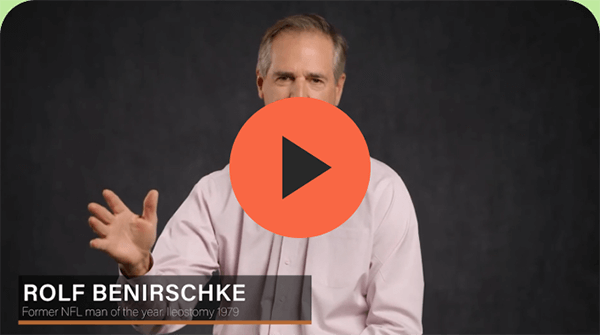
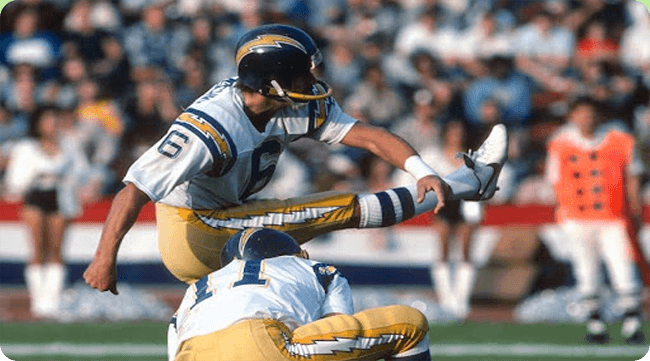
Rolf Benirschke is a former NFL Man of the Year and All-Pro placekicker who played 10 seasons in the NFL for the San Diego Chargers. His career was briefly interrupted when he was diagnosed with Crohn’s Disease that required ileostomy surgery in his third season. Remarkably, Rolf returned to play seven more years with the Chargers, becoming the first ever professional athlete to play with an ostomy appliance. He has been an outspoken champion of the ostomy community for the past 40 years and created Embracing Ostomy Life™ to provide the hope, education and encouragement to ensure that no one goes through ostomy surgery alone.
Join Team HOPE
Do you wish you could connect with someone like you who has an ostomy and similar life goals? You can! Our Team HOPE (Helping Ostomates through Peer Encouragement) program can pair you with a volunteer who has an ostomy that will listen, empathize and suggest resources to help you along your journey.