Losing one’s freedom to travel is another of the big fears of everyone who has undergone ostomy surgery. As you’ve heard from my friend, Jonathan Negretti, who ran seven marathons in seven consecutive days on seven continents with his ostomy, he was afraid he was going to be confined to his house for the rest of his life after his surgery!
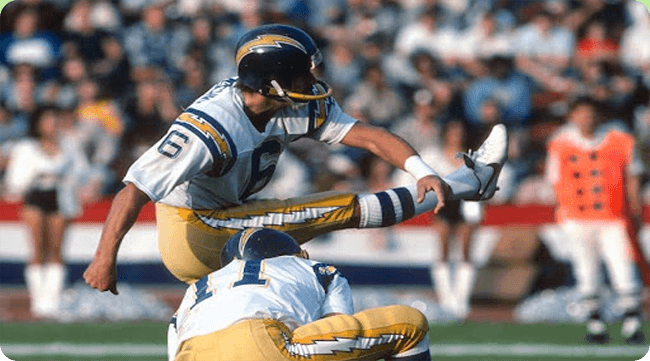
Playing in the NFL obviously comes with a rigid training schedule and lots of travel…and there is absolutely no flexibility. During the week all the meetings, practices and game preparation are mandatory. When we traveled the coach told us what time to be at the stadium so we could get on the bus and travel to the airport as a team. Knowing all of this was a help, as it was up to me then to make sure that I managed my meals around the schedule of practices and games. I wanted to make sure not to take the chance of my pouch being filled during a game! That meant I needed to really understand how my digestive system worked and the timing of my output after eating. I learned that it helped me to eat at least two hours before a game (but not overeat) and to always empty my pouch at halftime. Now that I am long retired from football, I usually must empty my bag about 30 minutes after eating and then I am good to get on with our work or whatever activity I have planned for the day.
I’ve told you in an earlier message that changing the pouch will become just as easy and routine as brushing your teeth. It will be the same with traveling. You will learn when your pouch fills up after eating or drinking you will be able to plan accordingly. So, with just a little advance preparation and making sure you always have backup supplies in your carry on when you travel, you will develop the confidence that you can go anywhere in the world.
Former NFL Kicker
Former NFL Kicker, Walter Payton Man of the Year, Grateful Ostomy Patient
Story of the Day
Brian Sisselman, documentary film maker shares how he travels the world with his ostomy
Potential Complications
Be vigilant so you can stay out of the hospital
These potential complications may be preventable if you recognize the warning signs early and take the appropriate action.
1. Dehydration. One out of three ileostomy patients will be readmitted to the hospital for dehydration within 30 days of their operation. Learn how to stay hydrated here.
Learn more about hydration from our dietitian, Danielle.
2. Skin problems. Peristomal skin is the skin surrounding your stoma and should look and feel just like the skin on the rest of your abdomen (not irritated or red). Learn more about how to care for your peristomal skin and catch any problems early so they can be addressed.
3. Hernia. This happens when an organ or other tissue pushes through your abdominal muscles and creates a bulge. Since having ostomy surgery increases your risk of developing a hernia, you will want to follow these guidelines:
• Limit your lifting to 5-10 lbs. for the first 4-6 weeks post-surgery (or as directed by your surgeon) and always use proper lifting technique.
• Support the area around your stoma if you sneeze, cough, or laugh by squeezing a folded blanket or pillow.
Learn more about hernias and how to protect yourself here.
Hear Nurse Melody talk about hernias and how to prevent them here.
4. Problem Solving. You may encounter problems like skin irritation, leaks, no output and others. Click here for more details.
5. Medical Emergencies.Review this list so you will know when to call your surgeon/nurse or go to the nearest emergency room.
Ostomy Life
Be prepared with an emergency kit
We’ve talked about how to handle challenging situations, but a way to avoid them or minimize the embarrassment, is to have an “emergency kit” in places you frequent like your car, the gym, or your office. (Keep in mind that excessive heat can damage the adhesive on baseplates so be careful about leaving extra supplies in your glove compartment or the trunk of your car too long)
Sample emergency kit supplies:
• At least two of your ostomy pouching systems (appliances)
• Paper towels/gauze
• Plastic bags/trash bags
• Any accessories such as paste or barrier rings
• Adhesive remover wipes or spray
• Skin barrier wipes or spray
• Change of clothes and underwear
• Measuring guide
• Scissors
• Small handheld mirror
• Hand sanitizer
Getting to know your ostomy – What could go wrong?
You can feel confident about traveling with your ostomy! We’ve told you the stories of people who have climbed Mt. Everest, visited Antarctica or Africa, vacationed on the beach – there really are no limits! With a little advance planning go pack your suitcase and get out there!!
• Anticipate how many supplies you’ll need for the days you’ll be away…then double or triple it. Nothing’s worse than being stranded without supplies when you’re away from home.
• If you’ll be away from home for an extended period, check if there’s a local source in the area to buy ostomy supplies. Even if you’re sure you’ve packed enough, you’ll feel more secure knowing back-ups are available.
• Try to keep to your usual eating practices while you’re away. This is no time to try something new and exotic or to treat yourself to something you think might make you gassy or affect your output in a significant way.
• If you feel the local water might be a little iffy, use bottled water – not just for drinking but also for washing your stoma area and rinsing out your pouches. If you thought travelers’ diarrhea was bad before, imagine having it with an ostomy! (Remember dehydration tips!)
• For more practical tips on staying in hotels, being a houseguest, air travel, and road trips or camping trips click here.
• For specific air travel tips from the UOAA and the TSA click here.
• For a downloadable travel communication card to simplify communication with TSA personnel click here.
We offer our sincerest thanks to Joan Scott — a kind ostomate and brilliant writer — for allowing us to include excerpts of, her book, “The Ostomy Raft”, in Alive & Kicking. To purchase a copy filled with tons of practical tips for living with an ileostomy or colostomy, click the button below.
Rolf Benirschke is a former NFL Man of the Year and All-Pro placekicker who played 10 seasons in the NFL for the San Diego Chargers. His career was briefly interrupted when he was diagnosed with Crohn’s Disease that required ileostomy surgery in his third season. Remarkably, Rolf returned to play seven more years with the Chargers, becoming the first ever professional athlete to play with an ostomy appliance. He has been an outspoken champion of the ostomy community for the past 40 years and created Embracing Ostomy Life™ to provide the hope, education and encouragement to ensure that no one goes through ostomy surgery alone.
Join Team HOPE
Do you wish you could connect with someone like you who has an ostomy and similar life goals? You can! Our Team HOPE (Helping Ostomates through Peer Encouragement) program can pair you with a volunteer who has an ostomy that will listen, empathize and suggest resources to help you along your journey.